
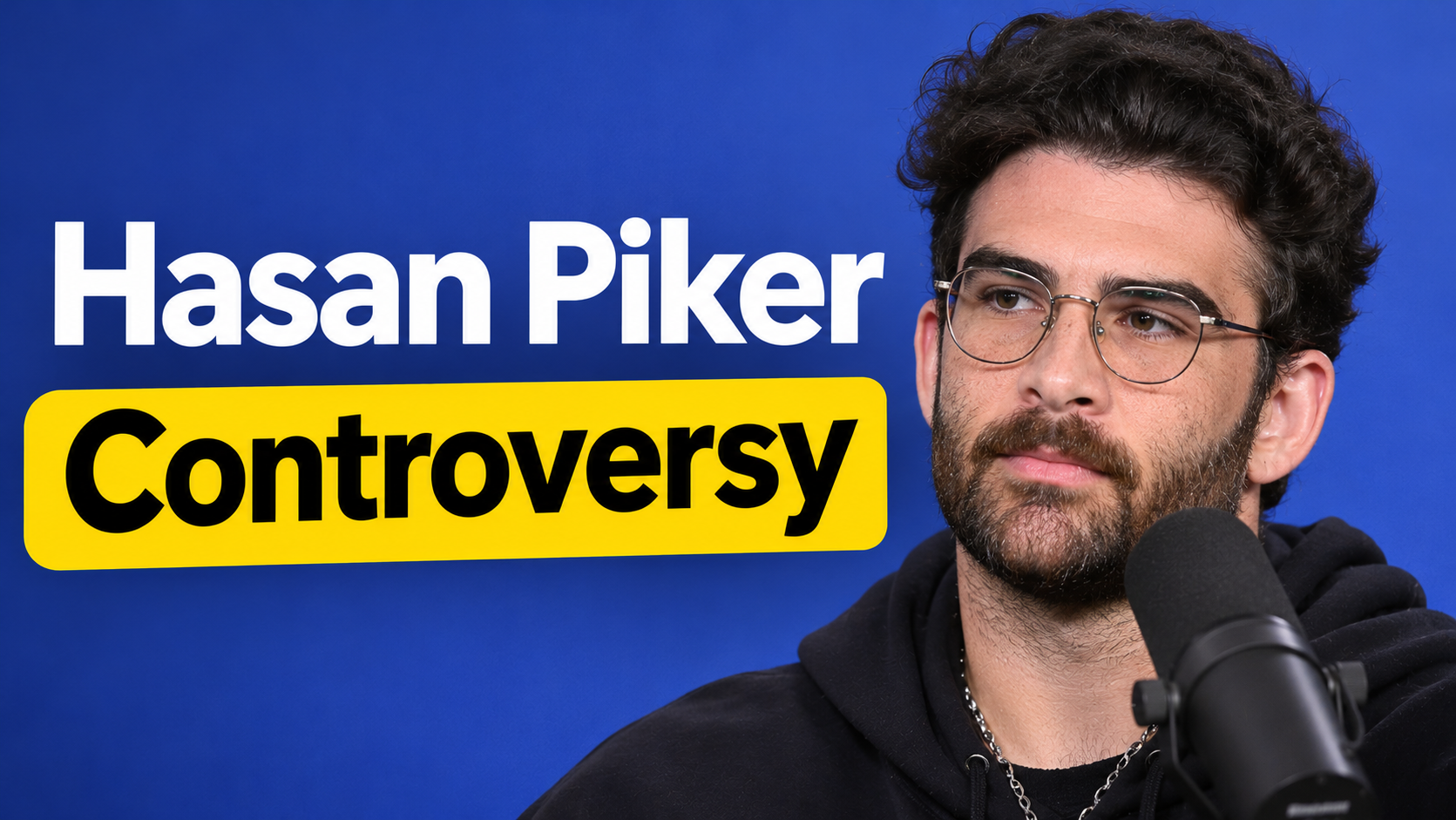
The Hasan Piker controversy has attracted widespread attention as the popular Twitch streamer becomes increasingly influential in American political discussions. From provocative statements about September 11 to criticism of his views on Israel, Piker has faced repeated backlash. His growing involvement in politics during 2026 has renewed debates about free speech, accountability, and the responsibilities of online influencers.
Who Is Hasan Piker?
Hasan Piker, widely known as HasanAbi, is a Turkish-American political commentator and livestreamer.
He became popular through political commentary, gaming streams, and discussions about social justice, economic inequality, and international affairs.
Previously associated with The Young Turks, Piker developed a substantial following on Twitch and YouTube.
His outspoken socialist views have attracted dedicated supporters while generating criticism from political opponents.
The 2019 September 11 Controversy
One of Piker’s most widely discussed incidents occurred in August 2019.
During a livestream criticizing American foreign policy, he stated that America deserved the September 11 attacks.
The remark triggered criticism because thousands of innocent people died in the terrorist attacks.
Piker subsequently acknowledged that his language was inappropriate and described the statement as an unsuccessful attempt at satire.
Despite his explanation, the incident remains frequently referenced by critics.
Hasan Piker Controversy Over Israel and Gaza
Piker’s commentary about Israel and the Palestinian territories has generated significant political debate.
He frequently criticizes Israeli government policies and describes himself as anti-Zionist.
Critics, including Jewish advocacy organizations, have accused him of using antisemitic rhetoric and minimizing extremist violence.
Piker rejects accusations of antisemitism and argues that his position concerns political ideology, Palestinian rights, and opposition to Israeli government actions.
In August 2026, statements he made about Jewish Americans and support for Israel drew condemnation from several Democratic politicians.
Piker maintained that critics misunderstood his warning about the dangers of associating Jewish identity with Israeli government policy.
Why Was Hasan Piker Banned From Twitch?
Piker has received multiple temporary Twitch suspensions.
In March 2025, his comments concerning Republican politician Rick Scott prompted another suspension. He later acknowledged using inappropriate, exaggerated language.
On January 29, 2026, Twitch suspended his account during a political livestream.
Piker suggested that his use of language concerning Zionists triggered the action, although Twitch did not publicly confirm the exact reason.
These incidents raised questions about how streaming platforms enforce their content policies.
Why Was Hasan Piker Barred From the UK?
In June 2026, British authorities prevented Piker and fellow commentator Cenk Uygur from entering the United Kingdom for planned public appearances.
Officials cited concerns that their presence might not serve the public good.
Piker criticized the decision, connecting it to his outspoken criticism of Israel.
The incident sparked disagreement over government restrictions and political expression.
Hasan Piker’s 2026 Defamation Lawsuit
In October 2026, Piker filed a $72.5 million defamation lawsuit against conservative commentator Scott Jennings.
The lawsuit alleges that Jennings misrepresented edited livestream footage and falsely portrayed Piker as advocating racial violence.
These are allegations in an ongoing legal dispute, not established judicial findings.
The case added another dimension to the public debate surrounding Piker’s reputation.
Why Does the Hasan Piker Controversy Matter?
Piker represents a growing connection between livestreaming, political activism, and mainstream electoral campaigns.
Supporters value his willingness to challenge established political narratives. Critics argue that inflammatory statements can encourage division and distract from serious issues.
The Hasan Piker controversy illustrates how online political personalities face increasing scrutiny as their influence extends beyond social media into national politics.
