
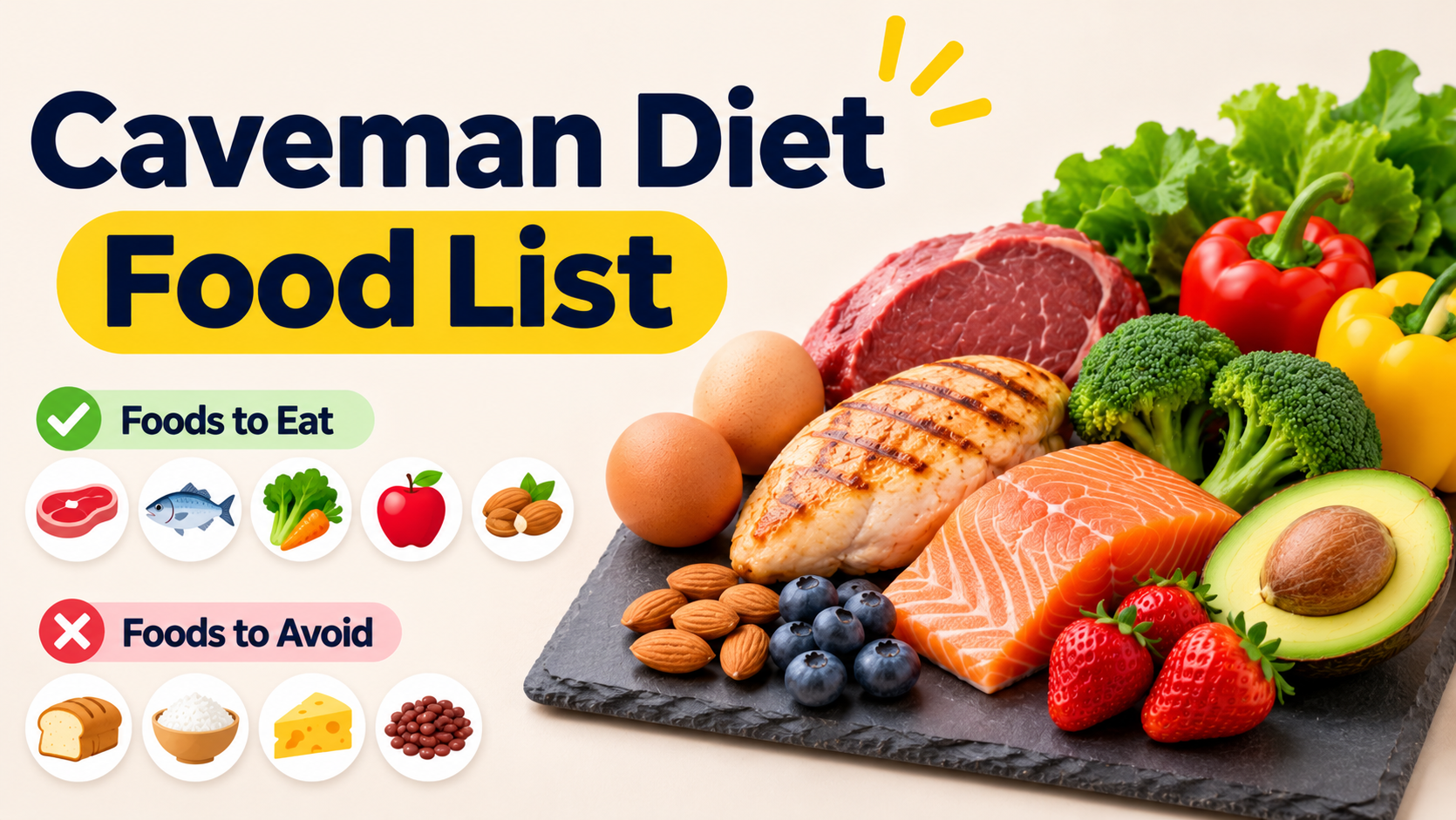
Starting a new eating plan can be confusing, especially when you don’t know which foods belong on your plate. The caveman diet food list makes meal planning easier by focusing on meat, fish, vegetables, fruits, nuts, and seeds. Also known as the paleo diet, this eating approach emphasizes minimally processed foods while eliminating several modern dietary staples. Understanding its food choices can help you plan meals and recognize potential nutritional limitations.
What Is the Caveman Diet?
The caveman diet, commonly called the Paleolithic or paleo diet, is inspired by foods early humans may have obtained through hunting, fishing, and gathering.
It emphasizes whole foods while excluding grains, legumes, dairy products, and most highly processed foods.
However, prehistoric diets varied across regions, so there is no single historically accurate paleo menu.
Complete Caveman Diet Food List
1. Meat and Poultry
Meat provides protein, iron, and essential nutrients. Common paleo-friendly options include:
- Chicken and turkey
- Lean beef
- Lamb
- Venison
- Pork
Choose unprocessed cuts and limit heavily processed meats containing additives.
2. Fish and Seafood
Fish supplies protein, while fatty varieties provide beneficial omega-3 fatty acids.
Popular choices include salmon, tuna, sardines, trout, shrimp, and other seafood.
3. Vegetables
Vegetables provide fiber, vitamins, minerals, and antioxidants.
A typical caveman diet food list includes broccoli, spinach, carrots, cauliflower, kale, cabbage, and bell peppers.
Sweet potatoes are also accepted in many paleo variations.
4. Fresh Fruits
Fruits provide natural carbohydrates, vitamins, and dietary fiber.
Common options include apples, bananas, oranges, strawberries, blueberries, grapes, and pears.
Whole fruits are generally preferred over sweetened fruit drinks.
5. Nuts and Seeds
Nuts and seeds provide healthy fats and plant-based nutrients.
Examples include almonds, walnuts, cashews, pumpkin seeds, sunflower seeds, chia seeds, and flaxseeds.
Peanuts are generally excluded because they are legumes.
6. Healthy Fats and Eggs
Other commonly included foods are eggs, avocados, olive oil, and coconut oil.
These ingredients can complement meals and provide additional energy.
Foods to Avoid on the Caveman Diet
Traditional paleo plans generally exclude:
- Grains: Wheat, rice, oats, barley, and corn.
- Legumes: Beans, lentils, chickpeas, and peanuts.
- Dairy: Milk, cheese, yogurt, and cream.
- Refined sugar: Candy, sugary beverages, and sweetened desserts.
- Highly processed foods: Packaged snacks and many ready-made meals.
Some paleo variations allow additional foods, so individual guidelines may differ.
Simple One-Day Caveman Diet Meal Plan
| Meal | Food Options |
|---|---|
| Breakfast | Scrambled eggs, avocado, and berries |
| Lunch | Grilled chicken with mixed vegetables |
| Snack | Almonds and an apple |
| Dinner | Baked salmon, broccoli, and roasted sweet potatoes |
This sample menu offers a practical starting point rather than a personalized nutrition prescription.
Is the Caveman Diet Healthy?
The paleo diet encourages vegetables, fruits, and minimally processed foods, which can support nutritious eating habits.
However, avoiding dairy, legumes, and whole grains may reduce calcium, fiber, and other important nutrient intake.
Research has not established that paleo eating provides superior long-term health benefits compared with other balanced diets.
Final Thoughts
A caveman diet food list can simplify grocery shopping by highlighting vegetables, fruits, lean protein, nuts, and seeds.
Before adopting strict food restrictions, consider your nutritional needs and whether the eating plan is sustainable.
Balanced nutrition matters more than following any diet perfectly.
