
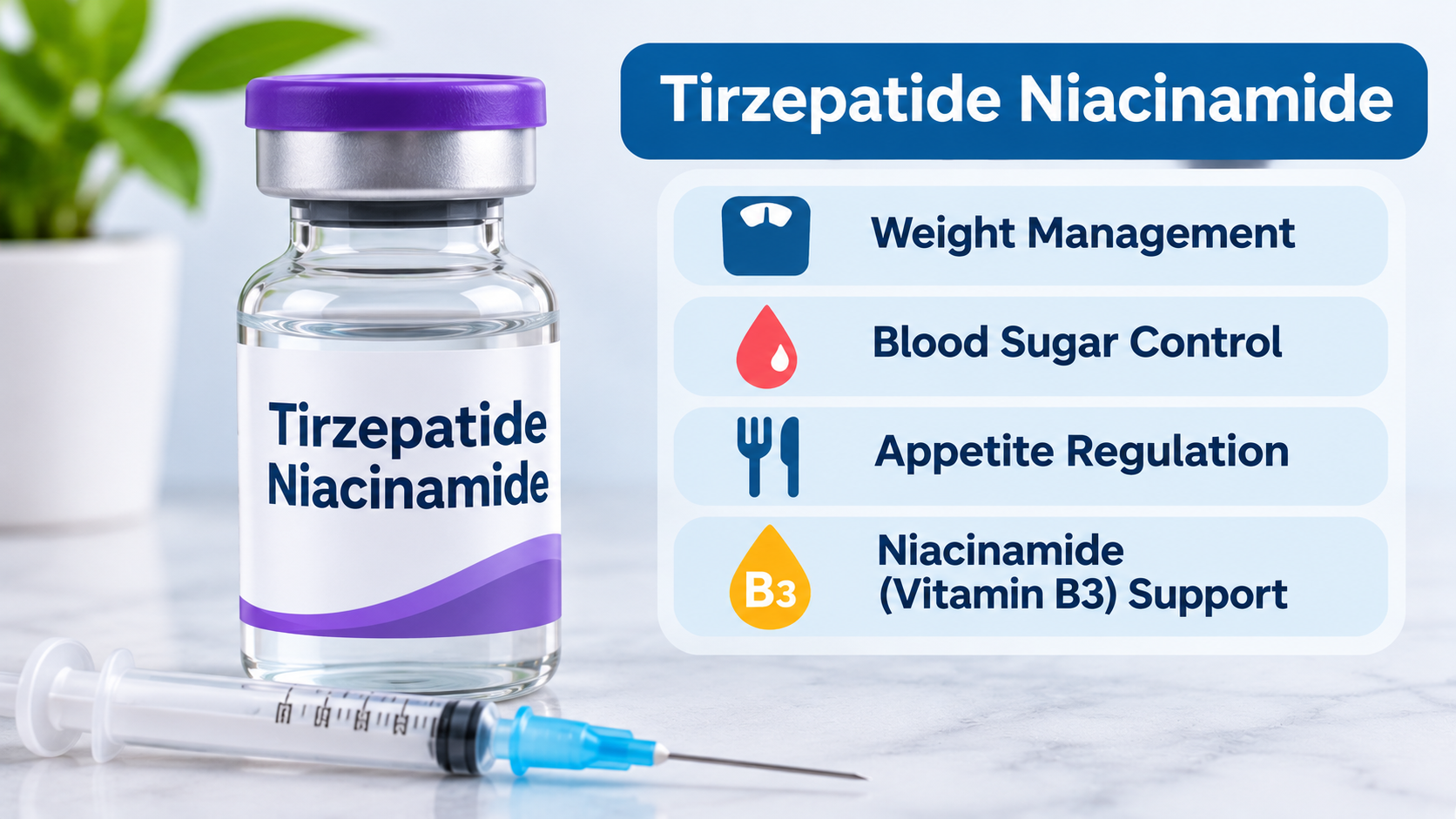
Tirzepatide niacinamide has attracted growing attention among people researching weight-loss medications and metabolic health. Some compounding pharmacies combine tirzepatide, a prescription medication, with niacinamide, a form of vitamin B3.
Although tirzepatide is FDA-approved for certain medical conditions, combining it with niacinamide creates a different formulation that has not received FDA approval.
Understanding the potential benefits, safety concerns, and regulatory status is important before considering this combination.
What Is Tirzepatide Niacinamide?
Tirzepatide niacinamide refers to a compounded medication containing tirzepatide and niacinamide.
Tirzepatide activates two hormone receptors: glucose-dependent insulinotropic polypeptide (GIP) and glucagon-like peptide-1 (GLP-1).
These actions help regulate blood sugar, appetite, and food intake.
Niacinamide, also called nicotinamide, is a form of vitamin B3 that supports normal cellular energy metabolism.
However, adding niacinamide does not automatically improve tirzepatide’s effectiveness.
Why Is Niacinamide Added to Tirzepatide?
Some compounding pharmacies include niacinamide in tirzepatide formulations because of its role in normal metabolism.
Vitamin B3 contributes to the production of important cellular compounds involved in energy processing.
Nevertheless, there is no established clinical evidence that adding niacinamide to tirzepatide increases weight loss, improves blood sugar control, or reduces medication side effects.
Research supporting FDA-approved tirzepatide products should not be interpreted as proof that compounded combinations provide identical results.
Potential Benefits of Tirzepatide Niacinamide
The recognized medical benefits come primarily from tirzepatide itself.
Weight Management: Tirzepatide can support significant weight reduction in eligible patients when combined with appropriate lifestyle changes.
Blood Sugar Control: Tirzepatide helps improve glucose regulation in patients with type 2 diabetes.
Appetite Regulation: Its hormone-related effects may reduce hunger and support lower food intake.
Vitamin B3 Function: Niacinamide supports normal cellular processes, but additional benefits from combining it with tirzepatide remain unproven.
These potential effects should not be considered evidence that the compounded combination is safe or effective.
Is Tirzepatide Niacinamide FDA Approved?
No. As of November 2026, thplease new article write unique 500 words my keyword : gumshoos trump
e FDA has not approved the tirzepatide-niacinamide combination.
The FDA-approved tirzepatide medications include Mounjaro and Zepbound, both administered by injection.
In September 2026, the FDA issued a warning letter identifying certain compounded tirzepatide-niacinamide products as apparent copies of approved medications.
Compounding must meet specific federal requirements, and adding another ingredient does not automatically make a formulation legally permissible.
Possible Side Effects and Risks
Tirzepatide commonly causes gastrointestinal symptoms, including nausea, vomiting, diarrhea, constipation, and abdominal discomfort.
More serious risks include pancreatitis, gallbladder problems, and dehydration-related kidney injury.
FDA-approved tirzepatide also carries a boxed warning concerning thyroid C-cell tumors observed in animal studies.
Compounded combinations introduce additional uncertainties involving ingredient compatibility, sterility, concentration, and product quality.
Should You Use Tirzepatide Niacinamide?
Patients should discuss treatment options with licensed healthcare professionals before considering compounded tirzepatide.
FDA-approved medications are generally preferred when they can meet the patient’s medical needs.
Avoid purchasing unapproved injectable products from unverified online sellers.
Final Thoughts
Tirzepatide niacinamide combines a prescription medication with vitamin B3, but its additional benefits have not been established through adequate clinical studies.
While tirzepatide has demonstrated effectiveness for approved medical uses, compounded combinations require careful consideration.
Choosing FDA-approved treatment under professional medical supervision remains the safer, better-studied approach.
