
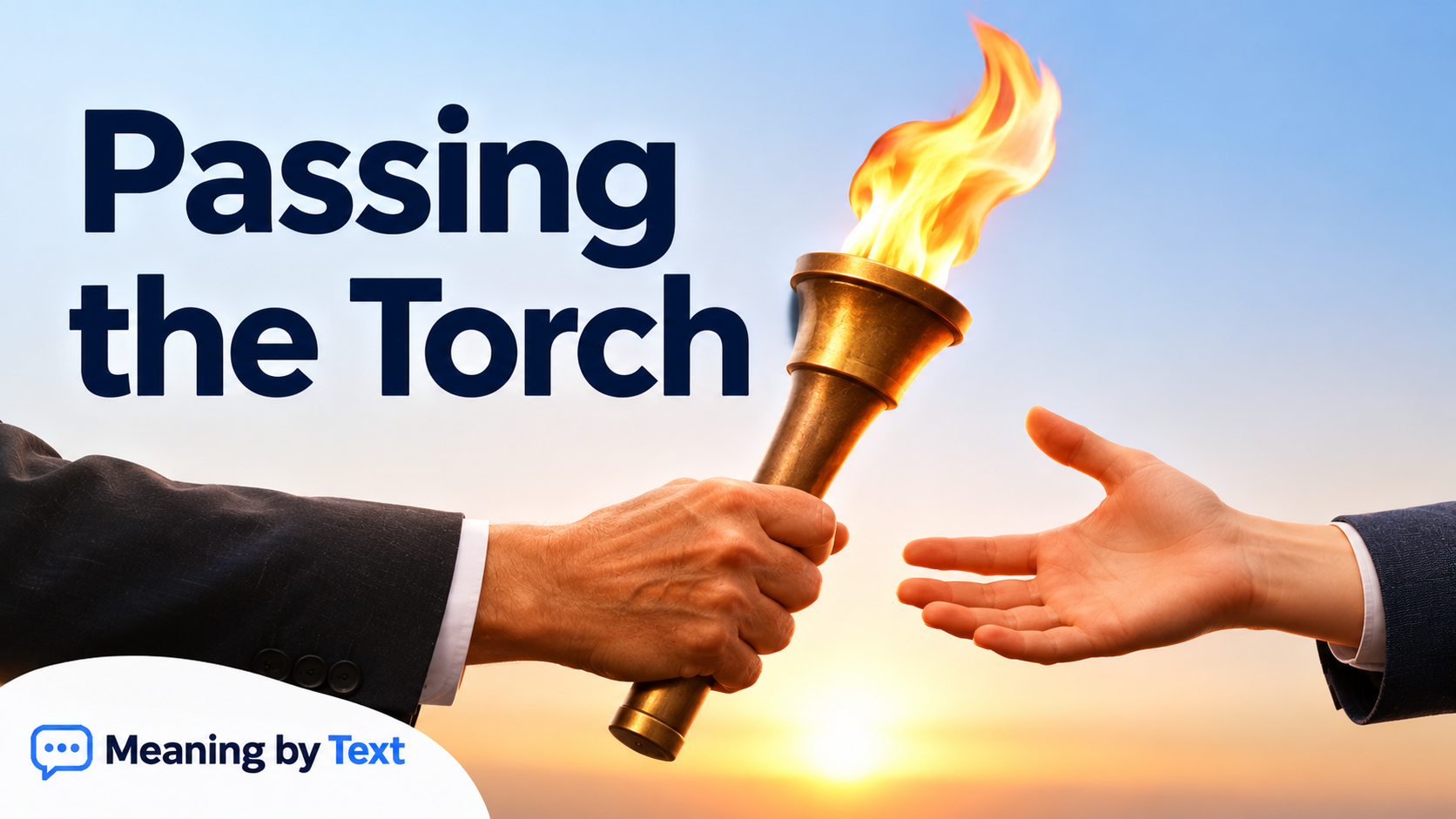
Every generation faces a moment when experienced leaders must make room for new talent. However, transferring responsibility can be challenging, especially when traditions, expectations, and personal achievements are involved. Passing the torch represents this important transition, where knowledge, leadership, and responsibility move from one person to another. Understanding this expression reveals valuable lessons about mentorship, personal growth, and preparing future generations for success.
What Does Passing the Torch Mean?
Passing the torch is an expression that means transferring responsibility, leadership, knowledge, or a particular role to another person.
The phrase is commonly used when someone retires, steps down from a position, or allows a younger generation to take over.
For example, a business owner who transfers company leadership to their children is passing the torch.
The expression often represents trust, continuity, and the beginning of a new chapter.
Origin of the Phrase Passing the Torch
The expression comes from the symbolism of a burning torch being handed from one person to another.
A torch represents light, guidance, knowledge, and continuity. During a relay, one runner carries the flame forward before transferring it to another participant.
This image became a powerful metaphor for sharing responsibilities and maintaining progress across generations.
Today, the phrase appears in professional, educational, political, and personal conversations.
Passing the Torch in Different Areas of Life
1. Leadership and Business
In business, passing the torch happens when an experienced leader transfers authority to a successor.
Successful transitions require careful planning, communication, and trust.
A retiring chief executive, for example, may mentor a replacement before leaving the organization.
2. Family and Generations
Families often pass down traditions, values, skills, and responsibilities.
Parents and grandparents share their experiences with younger relatives, helping preserve meaningful family connections.
This process keeps cultural knowledge alive while allowing each generation to develop its own identity.
3. Sports and Entertainment
In sports, veteran athletes may guide younger teammates who eventually become team leaders.
Similarly, established entertainers sometimes support emerging artists and encourage their professional development.
These transitions help maintain continuity while introducing fresh perspectives.
Why Is Passing the Torch Important?
Passing the torch supports growth by creating opportunities for new leaders and preserving valuable experience.
It also encourages mentorship, teamwork, and long-term planning.
Without effective transitions, organizations and families may struggle to maintain established practices or prepare for future challenges.
Successful handovers balance respect for previous achievements with openness to change.
How to Pass the Torch Successfully
An effective transition requires more than simply assigning someone a new responsibility.
Consider these practical steps:
- Choose the right successor: Identify someone with suitable skills and commitment.
- Share valuable knowledge: Explain important processes, lessons, and responsibilities.
- Provide mentorship: Offer guidance while encouraging independent decisions.
- Build confidence: Allow the successor to develop their own leadership style.
- Maintain communication: Discuss expectations and address challenges openly.
These steps can make transitions smoother and create lasting confidence.
Examples of Passing the Torch in Sentences
- The retiring principal is passing the torch to a new school leader.
- The experienced athlete decided to pass the torch to younger teammates.
- The founder celebrated passing the torch to the next generation.
Final Thoughts
Passing the torch symbolizes trust, responsibility, and the continuation of meaningful work.
Whether it happens in families, businesses, education, or sports, the process connects past experience with future opportunities.
A thoughtful transition preserves valuable knowledge while empowering others to create their own success.
