
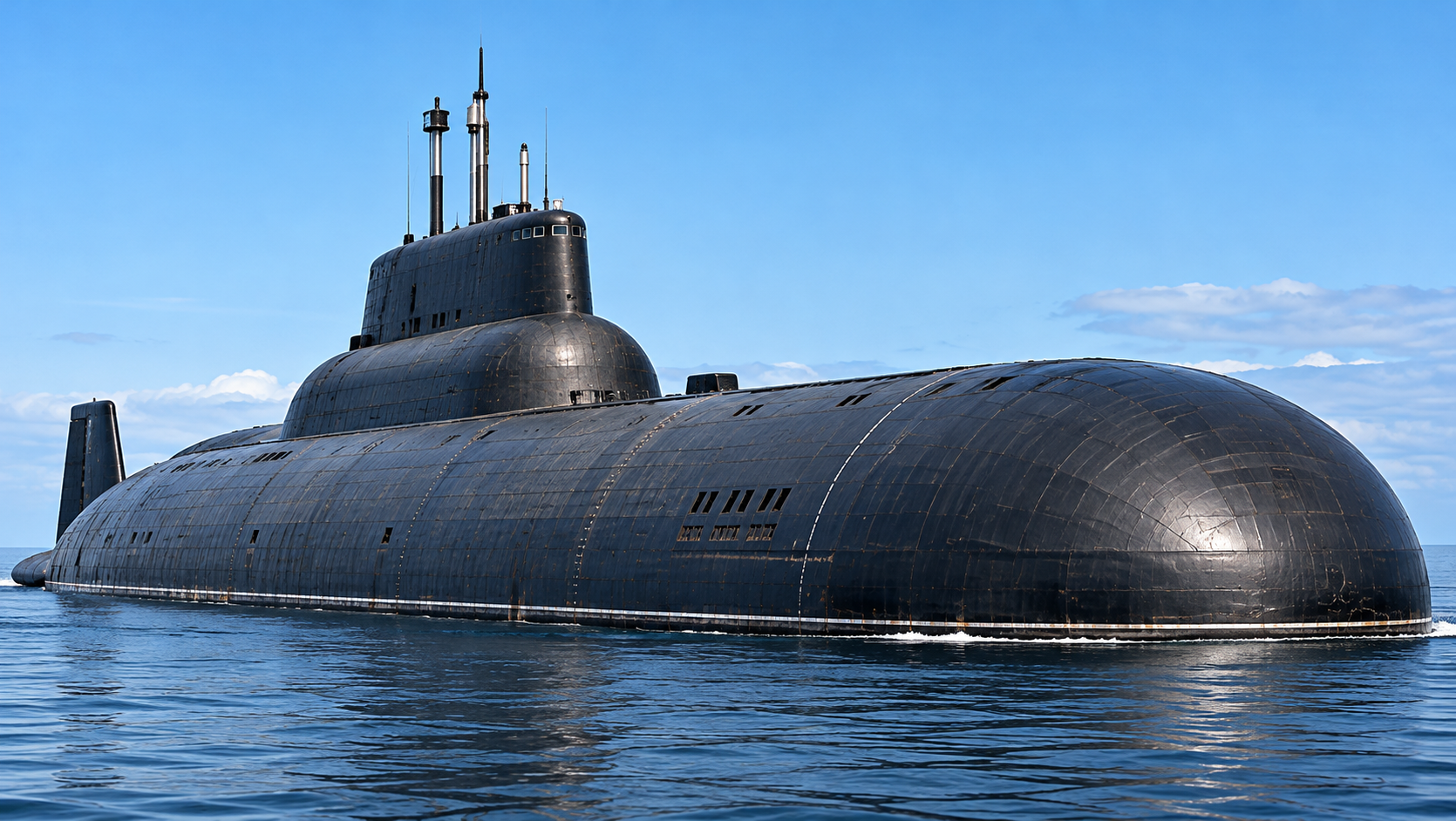
The Typhoon sub is one of the most remarkable submarines ever built. Developed by the Soviet Union during the Cold War, the Typhoon-class submarine became famous for its enormous size, nuclear propulsion, and powerful missile systems. Designed for long underwater missions, it played an important role in Soviet nuclear deterrence. Although these submarines are no longer operational, their engineering and military history continue to attract worldwide interest.
What Is a Typhoon Sub?
The Typhoon sub is a nuclear-powered ballistic missile submarine developed by the Soviet Union.
Officially designated Project 941 Akula, it received the NATO reporting name Typhoon.
These submarines were designed to carry nuclear ballistic missiles and operate beneath Arctic ice, making them valuable assets during the Cold War.
History of the Typhoon-Class Submarine
Development of the Typhoon class began during the 1970s as the Soviet Union expanded its strategic submarine fleet.
The first vessel, TK-208 Dmitry Donskoy, entered service in 1981.
Six Typhoon-class submarines were eventually completed at the Sevmash shipyard in Severodvinsk, Russia.
Their primary purpose was to strengthen the Soviet Union’s nuclear deterrent by maintaining missile-launching capabilities at sea.
How Big Is the Typhoon Sub?
The Typhoon class remains the largest submarine class ever constructed by submerged displacement.
Its impressive specifications include:
| Feature | Specification |
|---|---|
| Length | Approximately 175 meters |
| Width | Approximately 23 meters |
| Submerged displacement | Up to 48,000 metric tons |
| Propulsion | Two nuclear reactors |
| Underwater speed | Approximately 25–27 knots |
| Crew | Around 150–160 personnel |
| Original ballistic missiles | 20 R-39 missiles |
These enormous dimensions allowed the submarines to accommodate large weapons systems, equipment, and crew facilities.
Unique Features of the Typhoon Submarine
1. Nuclear Propulsion
The Typhoon class used two nuclear reactors to provide power for propulsion and onboard systems.
This allowed extended underwater operations without frequent refueling.
2. Advanced Hull Design
The submarine featured two large parallel pressure hulls within its overall structure.
This unusual arrangement provided space for equipment, missile compartments, and crew accommodations.
3. Arctic Operations
Typhoon submarines were designed to operate in Arctic waters.
Their construction allowed them to remain submerged beneath sea ice and conduct strategic patrols in northern regions.
4. Crew Facilities
Compared with many earlier submarines, the Typhoon class offered relatively spacious accommodations.
Facilities included living quarters, recreational areas, and amenities intended to support personnel during lengthy missions.
What Weapons Did the Typhoon Sub Carry?
The Typhoon sub originally carried up to 20 R-39 submarine-launched ballistic missiles.
These missiles were designed to carry multiple nuclear warheads over long distances.
The submarines also featured torpedo tubes for additional defensive capabilities.
Their main military role was strategic nuclear deterrence rather than conventional naval combat.
Is the Typhoon Sub Still in Service?
No Typhoon-class submarines remain in active service.
The final operational vessel, Dmitry Donskoy, was withdrawn from service in February 2023.
Other submarines from the class had already been retired or placed in reserve.
Russia subsequently relied on newer submarine classes, including the Borei class, for its sea-based nuclear deterrent.
Final Thoughts
The Typhoon sub represents an extraordinary achievement in Cold War naval engineering.
Its massive size, distinctive design, and strategic missile capabilities made it a recognizable symbol of Soviet military power.
Although retired, the Typhoon class remains an important chapter in submarine development and naval history.
