
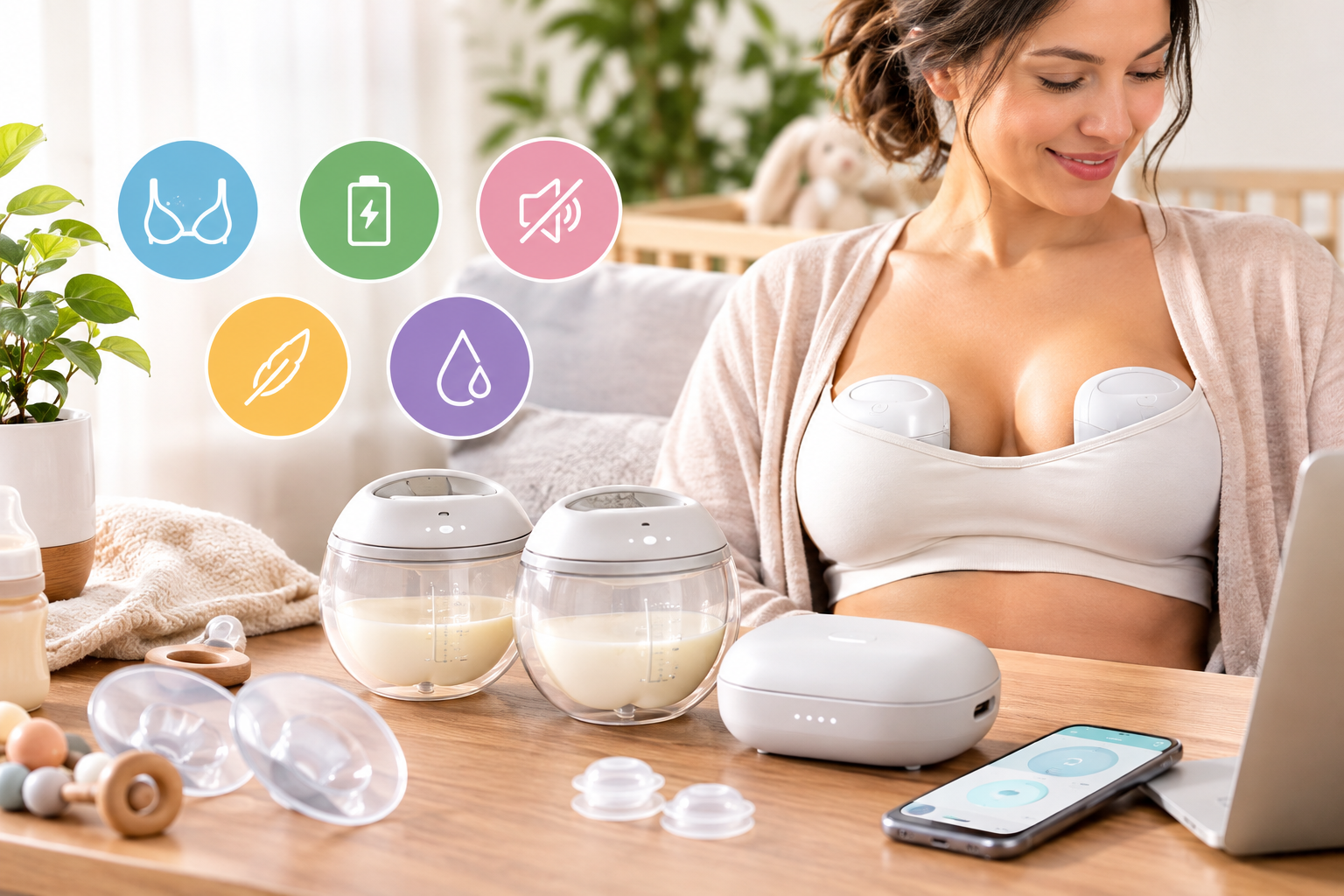
Finding the best wearable breast pump in 2026 can make breastfeeding and milk expression more convenient for busy parents. Whether you are returning to work, caring for a newborn, traveling, or managing daily household responsibilities, a wearable breast pump can offer more flexibility than a traditional pump connected to a wall outlet.
Modern wearable breast pumps are designed to fit inside a nursing bra, collect breast milk discreetly, and operate without external tubing. Some models also include smartphone controls, warming technology, rechargeable batteries, and customizable suction settings.
However, not every pump works equally well for every person. Comfort, flange fit, milk output, noise level, cleaning requirements, and price all play important roles in choosing the right device.
In this guide, we explore some of the best wearable breast pumps to consider in 2026 and explain what makes each option worth researching.
What Is a Wearable Breast Pump?
A wearable breast pump is a compact, battery-powered device designed to sit inside a bra while expressing breast milk. Unlike many traditional electric pumps, it does not require the user to remain connected to a separate motor by long tubes during a pumping session.
Most wearable pumps contain a motor, breast shield, milk collection container, and rechargeable power source. Depending on the model, users may control the pump through physical buttons or a smartphone application.
These devices are especially appealing to parents who want to pump while working at a desk, preparing meals, or completing light everyday activities. Nevertheless, wearable pumps can vary considerably in comfort, suction performance, capacity, and ease of cleaning.
Best Wearable Breast Pump 2026: Top Products to Consider
The best choice depends on your personal needs rather than brand popularity alone. The following models offer different combinations of convenience, discretion, technology, and value. Product availability and prices may vary by country and retailer.
1. Willow Go Wearable Breast Pump — Best Overall Option to Consider
The Willow Go is a popular hands-free breast pump designed for parents who want a cordless pumping experience without moving to a more complicated system.
Its wearable design places the motor and milk collection components inside the bra, making it suitable for pumping at home, at work, or while traveling. It also offers adjustable pumping settings to help users find a comfortable routine.
Key features:
- Hands-free, cordless operation
- Multiple suction and pumping settings
- Reusable milk collection containers
- Portable design for everyday use
Pros:
- Convenient for daily pumping routines
- No external tubing during use
- Offers customizable settings
Cons:
- May feel bulky under fitted clothing
- Requires careful positioning to reduce spills
- Individual milk output and comfort can vary
The Willow Go is worth considering if you want a balance of portability, customization, and everyday usability. Babylist named it its top wearable pump for most users in its 2026 guide, although personal fit and performance remain important factors.
2. Elvie Wearable Breast Pump — Best for Discreet Pumping
For parents who prioritize a low-profile design, the Elvie wearable breast pump is another option to investigate.
The pump is designed to fit inside a nursing bra and operate quietly compared with many conventional pumping setups. Its compact form can make it appealing to people who need to express milk during work breaks or in shared environments.
Key features:
- Compact, wireless design
- Quiet operation
- Smartphone connectivity and pumping controls
- Milk collection directly within the wearable unit
Pros:
- Designed for discreet use
- No external tubes while pumping
- Useful for work and travel
Cons:
- Generally positioned at a premium price
- App connectivity may not suit everyone
- Fit and milk collection can be affected by movement
The Elvie is a strong candidate for parents who value discretion. However, a quiet pump is not automatically the most effective pump, so consider comfort and milk removal alongside noise levels.
3. Momcozy M5 Smart Wearable Breast Pump — Best for Value
The Momcozy M5 is worth considering if you want wearable convenience without paying the highest prices in the category.
It combines a compact pumping unit with adjustable settings and a design intended for use inside a bra. Its rechargeable battery makes it practical for parents who pump in different locations throughout the day.
Key features:
- Cordless, hands-free design
- Adjustable pumping modes
- Rechargeable battery
- Compact milk collection system
Pros:
- Often less expensive than premium alternatives
- Convenient for occasional or on-the-go pumping
- Offers multiple settings
Cons:
- May be noticeable under clothing
- Cleaning and reassembly require attention
- Suction consistency and comfort vary by user
The Momcozy M5 is a useful option for parents comparing features against cost. Before purchasing, check which flange sizes and inserts are included, as accessories can affect both comfort and the final price.
4. Eufy Wearable Breast Pump S1 Pro — Best for Warming Technology
The Eufy S1 Pro stands out because it includes warming technology alongside its wearable pumping features.
The warming function is designed to provide gentle warmth around the breast shield area. Some users may find warmth comfortable during pumping, but it should not be assumed to increase milk production or improve output for everyone.
Key features:
- Wearable, cordless pumping
- Integrated warming technology
- Multiple pumping settings
- Portable charging case and app-based controls
Pros:
- Offers a feature not found on every wearable model
- Includes portable charging accessories
- Provides options for adjusting the pumping experience
Cons:
- Typically more expensive than basic wearable pumps
- Additional features may not be necessary for every user
- Requires cleaning and correct assembly after use
The Eufy S1 Pro may suit parents who value added comfort features and portability. Compare the charging setup and available flange sizes carefully before making a decision. Babylist highlighted its warming feature in its 2026 product comparison, while The Bump selected it as its overall top pick in a separate 2026 guide.
5. Lansinoh Wearable Breast Pump — Best for Practical Everyday Use
Lansinoh is another established name in breastfeeding products, and its wearable pump is an option for parents seeking a straightforward hands-free setup.
For many users, the most valuable features are easy assembly, comfortable positioning, reliable charging, and simple cleaning rather than an extensive list of smart functions.
Key features to check:
- Cordless pumping capability
- Available suction and cycle settings
- Milk collection capacity
- Flange sizing and included accessories
Pros:
- A useful option to compare with other established brands
- Designed for flexible pumping routines
- May appeal to users who prefer a practical setup
Cons:
- Availability and included accessories vary by market
- Fit must be checked before regular use
- Performance may differ from a traditional electric pump
If you are considering Lansinoh, verify the exact model and specifications sold in your region. Product names and configurations can differ between markets.
6. Medela Motion InBra Wearable Breast Pump — Best for a Simple In-Bra Design
The Medela Motion InBra is another model worth researching in 2026. It is designed to fit inside a bra and provide a more mobile pumping experience.
Medela’s established presence in breastfeeding equipment may make the brand appealing to parents who already use its products. Still, the specific pump’s fit, collection system, battery life, and cleaning requirements should determine whether it suits your needs.
Key features to compare:
- In-bra wearable construction
- Available pumping programs
- Ease of cleaning and assembly
- Battery and charging performance
Pros:
- Designed for hands-free use
- Suitable for parents who value portability
- Offers an alternative to larger external pump systems
Cons:
- Personal fit and comfort still need to be assessed
- Price and availability vary by retailer
- Wearable operation does not guarantee better milk removal
The Medela Motion InBra is worth including in your shortlist if you prefer an established breastfeeding equipment brand and want a pump designed for use inside a bra.
Quick Comparison of the Best Wearable Breast Pumps in 2026
| Breast pump | Best for | Main attraction | Potential drawback |
|---|---|---|---|
| Willow Go | Overall flexibility | Customizable cordless pumping | Can feel bulky |
| Elvie Pump | Discretion | Compact, quiet design | Premium pricing |
| Momcozy M5 | Value | Feature-rich wearable option | Fit and assembly may be challenging |
| Eufy S1 Pro | Added comfort features | Integrated warming technology | Higher cost |
| Lansinoh Wearable | Everyday convenience | Practical hands-free setup | Check local model specifications |
| Medela Motion InBra | In-bra portability | Wearable design from an established brand | Fit and cost need consideration |
These are editorial categories to help narrow your search, not a universal performance ranking. Independent reviewers may reach different conclusions because they use different testing methods and prioritize different features.
How to Choose the Best Wearable Breast Pump
Buying a wearable pump involves more than choosing the newest model. The following factors can help you find a device that works with your body and routine.
1. Choose the Correct Flange Size
Flange sizing is one of the most important considerations when purchasing a breast pump. The flange is the part that fits around the nipple and helps create the seal needed for pumping.
A flange that is too small or too large may cause discomfort, nipple rubbing, swelling, or less effective milk removal. Your size may also change during your breastfeeding journey.
Check the manufacturer’s sizing instructions and consider help from a qualified lactation professional if pumping is painful or milk removal seems consistently poor.
2. Evaluate Suction Settings
Different pumps offer different combinations of suction strength, rhythm, and pumping modes. A higher maximum suction level does not necessarily mean a pump will remove more milk.
Look for settings that allow comfortable adjustment. Pumping should not cause significant pain, and increasing suction beyond a comfortable level is not a reliable way to improve output.
3. Consider Battery Life
Battery life matters if you pump several times a day or frequently leave home.
Check the manufacturer’s stated number of sessions per charge, charging time, and whether the charging case powers the pumps directly or charges another component. Real-world battery performance may vary depending on settings and battery condition.
If you regularly pump at work, consider carrying a charging cable or planning a backup charging option.
4. Look at Milk Collection Capacity
Wearable pumps have different milk collection capacities. If you regularly express larger volumes, a small container may need to be emptied during a session.
Check the capacity of each collection cup and avoid relying on a pump’s advertised capacity as a prediction of how much milk you will produce. Your output depends on several personal and practical factors.
5. Compare Noise Levels
A quiet pump can be useful in an office, during travel, or when pumping near a sleeping baby. However, manufacturers may measure noise under different conditions, making direct comparisons difficult.
Look for independent testing or real-world reviews that describe how the pump sounds during normal operation.
6. Check Cleaning Requirements
Every part that comes into contact with breast milk must be cleaned according to the manufacturer’s instructions. Wearable pumps can contain several small parts, valves, seals, and collection components.
A model with fewer difficult-to-reach parts may be easier to maintain when pumping multiple times a day. Make sure the motor and electronic components are kept dry and are not washed unless the instructions explicitly allow it.
7. Compare Price and Warranty
The initial purchase price is only one part of the total cost. Replacement valves, extra collection cups, flange inserts, charging accessories, and warranty coverage can also affect value.
Before buying, check the return policy, replacement-part availability, warranty terms, and whether the manufacturer offers customer support in your country.
Are Wearable Breast Pumps Better Than Traditional Breast Pumps?
Neither type is automatically better for every breastfeeding parent. The right choice depends on how often you pump, how much milk you need to express, your comfort, and your lifestyle.
Wearable breast pumps are generally best for mobility and convenience. They can be helpful for workdays, travel, and situations where remaining connected to an external pump is inconvenient.
Traditional electric breast pumps may be preferable for people who need frequent pumping, require a stronger or more consistent milk-removal routine, or find wearable devices uncomfortable. Some traditional pumps also offer more flexible flange options or easier-to-monitor milk collection.
Some parents choose both: a traditional pump for regular sessions and a wearable model for occasional use outside the home. However, wearable pumps do not work equally well for everyone and may not remove milk as effectively as a traditional pump for some users.
If you rely on pumping to maintain your milk supply, speak with a lactation professional before replacing an effective pumping routine with a wearable device.
Are Wearable Breast Pumps Safe to Use?
Wearable breast pumps are medical devices, so it is important to follow the manufacturer’s instructions and use a device appropriate for your needs.
Before each session, check that the components are correctly assembled and that the flange fits comfortably. Avoid excessive suction, stop if pumping causes significant pain, and clean all milk-contact parts according to the supplied guidance.
If you experience persistent nipple injury, breast pain, recurring plugged ducts, or concerns about your milk supply, consult a qualified healthcare professional or lactation consultant.
In the United States, the Food and Drug Administration also advises consumers to consider their pumping needs when selecting a breast pump and warns against sharing or purchasing used single-user pumps because of contamination risks.
Frequently Asked Questions
What is the best wearable breast pump in 2026?
The best choice depends on your priorities. The Willow Go is worth considering for overall flexibility, the Elvie for discreet pumping, the Momcozy M5 for value, and the Eufy S1 Pro for warming technology. Compare comfort, fit, milk removal, cleaning, and cost before choosing.
Are wearable breast pumps worth the money?
They may be worth the investment if hands-free pumping makes it easier to maintain your routine. However, they can be expensive, and some users find traditional electric pumps more effective or comfortable. Consider how often you will use the device before purchasing.
Can you walk around while using a wearable breast pump?
Many wearable pumps allow light movement during use. However, bending forward, exercising vigorously, or making sudden movements may cause leakage or affect the seal. Follow the manufacturer’s instructions and avoid activities that could compromise safety or milk collection.
Can a wearable breast pump increase milk supply?
A wearable pump does not automatically increase milk supply. Milk production is influenced by effective and regular milk removal, among other factors. If your supply is a concern, a lactation professional can help assess pump fit, session frequency, and milk-transfer issues.
How often should wearable breast pump parts be cleaned?
Clean milk-contact parts after each use according to the manufacturer’s instructions. Follow any additional sanitizing recommendations appropriate for your baby’s age and health needs. Do not submerge the motor or electronic components unless the manufacturer specifically permits it.
Can you use a wearable breast pump as your only pump?
Some parents use a wearable pump as their main device, while others need a traditional electric pump for more effective or comfortable milk removal. If you depend on pumping for most or all of your baby’s milk, assess your output and comfort carefully and seek professional advice if you have concerns.
Conclusion
Choosing the best wearable breast pump in 2026 means finding the right balance of comfort, performance, convenience, and affordability. The Willow Go, Elvie, Momcozy M5, Eufy S1 Pro, Lansinoh, and Medela Motion InBra offer different features worth comparing.
Before making your purchase, prioritize correct flange sizing, comfortable suction, practical battery life, simple cleaning, and access to replacement parts. Remember that the most expensive pump is not necessarily the best one for your body.
With careful research and realistic expectations, you can choose a wearable breast pump that supports your daily routine while helping you express milk comfortably and conveniently.
